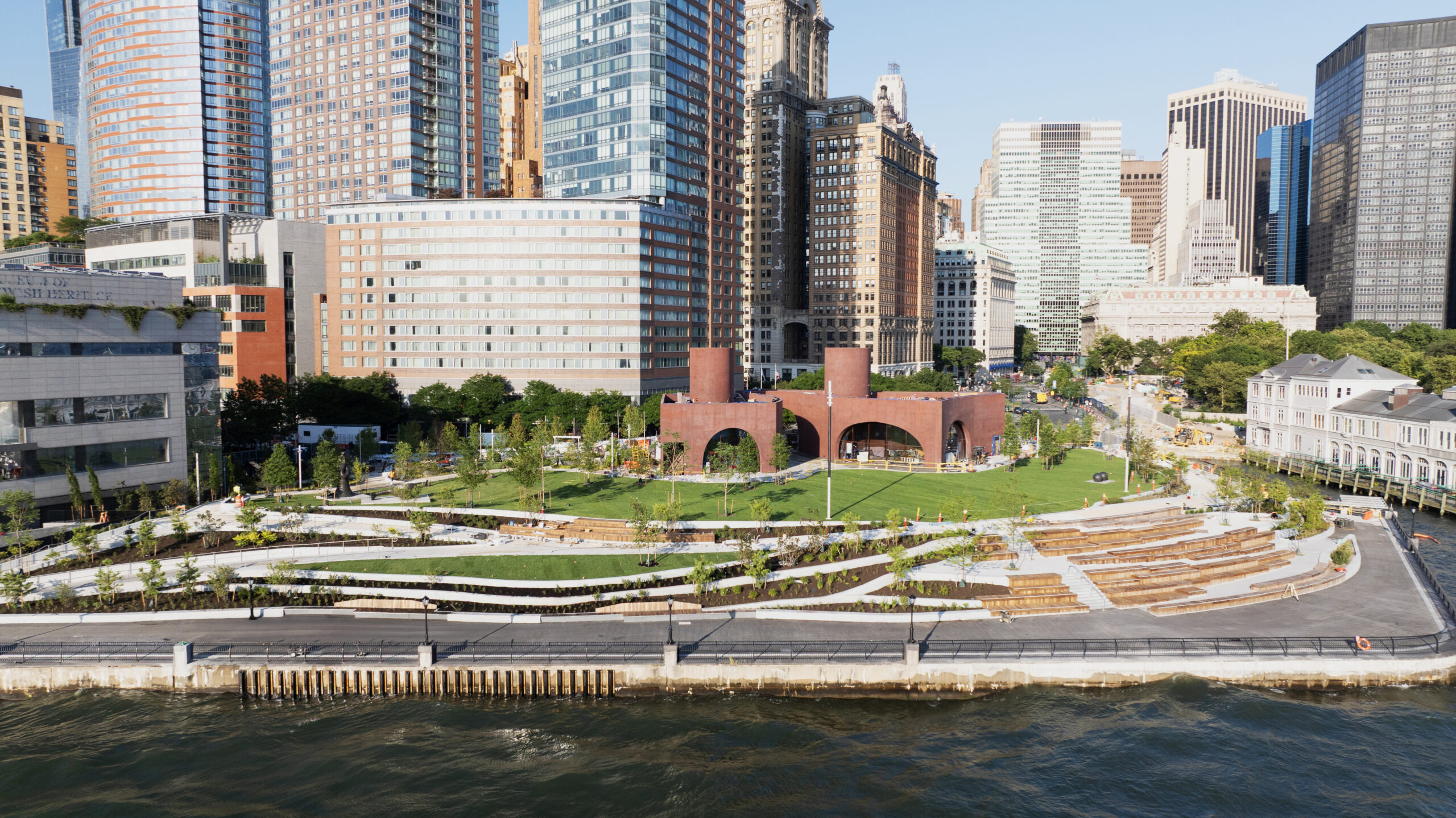
Wagner Park Provides Dedicated Coastal Flood Protection as part of New York City’s Lower Manhattan Coastal Resiliency Project
Meets Gold Standard for Resilient, Ecological, and Accessible Waterfront Design
Pictures, Video, Facts & Figures About the New Wagner Park Here
The Battery Park City Authority (BPCA) reopens Robert F. Wagner, Jr. Park, a 3.5-acre public park located along the Hudson River in southern Battery Park City, this evening at 7PM with a free, one-night only performance by Pulitzer Prize-nominated, genre-defying artist Taylor Mac. Temporarily closed in March 2023 for construction of the South Battery Park City Resiliency Project, a major part of New York City’s broader effort to defend Lower Manhattan against coastal flooding, the universally-accessible park now returns stronger and more sustainable, with a buried floodwall for neighborhood protection, 63,000-gallon subterranean cistern for rainwater reuse, and a palette of native, salt-resistant plantings in beautiful gardens designed to withstand the test of time.
“The Battery Park City Authority is thrilled to deliver Wagner Park back to the public with this environmentally sustainable, downtown destination featuring expansive lawns and gardens, programming spaces, beautiful views, and universal accessibility,” said BPCA Chairman Don Capoccia. “Let this magnificent public space overlooking the Statue of Liberty and Ellis Island serve as testament to the resilient spirit of New York.”
“More than a decade after Superstorm Sandy, our climate adaptation work continues with the return of a beautiful new Wagner Park,” said BPCA President & CEO Raju Mann. “Today’s reopening marks another step in our collective efforts to build a more resilient Lower Manhattan. We have a lot of work ahead, but today is a day to celebrate what we can do when we work together.”
At the heart of the redesigned Wagner Park is a comprehensive flood risk reduction system. Featuring both passive and deployable measures, the park will provide immediate risk reduction for a 100-year storm – a severe storm with a 1% likelihood of happening in any given year – and will also protect against a 100-year storm in the 2050s based on projected sea level rise, once Battery Park City’s overall resiliency project work is complete in 2031. The park also includes an upgraded stormwater drainage system designed to manage and reuse rainwater efficiently.
Beyond the newly-opened Wagner Park, from the north of the Museum of Jewish Heritage to Greenwich Street in Tribeca, BPCA will begin work later this year on the North/West Battery Park City Resiliency Project (NWBPCR), an interconnected series of fixed flood barrier features and deployable measures to provide flood protection for the balance of Battery Park City and western Tribeca. To better limit areas of residual flooding within the study area, the project also proposes to manage rainwater flooding by incorporating a wet-weather pump station, improved drainage connections, and upgraded tide gates.
Wagner Park: Key Resiliency & Sustainability Features
The new Wagner Park integrates flood protection and sustainable infrastructure to safeguard Battery Park City and Lower Manhattan and is part of the City of New York’s Lower Manhattan Coastal Resiliency Project. Key features include:
– Integrated Flood Barrier System: Built into the landscape to protect against storm surges and sea level rise.
– Stormwater Management: Grading and layout direct overland flows into a system that maximizes water capture and reuse.
– Sustainable Materials: Salvaged stone, wood, and trench drains from the original park have been reused in construction.
– Urban Heat Reduction: Paving materials selected to improve the solar reflectance index (SRI) and minimize heat island effects.
– Dark Sky-Compliant Lighting: Energy-efficient, solar-powered lighting enhances nighttime views while reducing glare.
– Ecological Zones: The park includes four planted regional ecosystems – tidal estuary, maritime meadow, maritime forest, and upland woodland.
– Native Plantings: Designed to reduce water use, lower maintenance, and support local biodiversity.
– Efficient Irrigation: Subsurface systems reduce turfgrass water consumption by over 30%.
– Educational Marine Habitat: A new area at the Pier A inlet promotes marine growth, in addition to allowing for environmental education and marine awareness.
The new Wagner Park has also achieved prestigious WEDG® (Waterfront Edge Design Guidelines) Verification from the Waterfront Alliance. WEDG is a national rating system and gold standard for resilient, ecological, and accessible waterfront design.
Wagner Park: The Pavilion
The new Wagner Park Pavilion, designed by Thomas Phifer and Partners, is approached from Battery Place by moving up through two sloped gardens, each ordered by the rhythm of an allée of trees. Visitors can also approach the Pavilion from the waterside esplanade by ascending the accessible ramps and stairs that provide multiple options for access. Arched vaults welcome the public to the entry piazza, serving as the gateway to the park. As visitors pass through the tremendous vault, the expansive green park and harbor come into view, with framed views of the Statue of Liberty and Ellis Island.
The Wagner Park Pavilion will open in phases – with a classroom debuting this fall and a new dining venue launching in 2026. Pursuing International Living Future Institute (ILFI) Zero Carbon Certification, the Pavilion is fully electrified and free of on-site combustion, setting a high bar for sustainable design. The building will also feature public restrooms and a large, publicly-accessible rooftop with stunning harbor views.
Wagner Park: Public Art & Free Public Programming
As it has since inception, Wagner Park will continue to be a vibrant public gathering space, featuring world-class public art and free community programming for residents and visitors of all ages. In addition to hosting temporary artworks, each of which will introduce a new perspective and experience for visitors, Wagner will be the permanent home for three major sculptures. Resonating Bodies, by Tony Cragg, invites visitors to run their hands over monumental and highly textured bronze instruments. Louise Bourgeois’s Eyes look towards the Statue of Liberty, gazing with the public at New York City’s storied past. And the Mother Cabrini Memorial, by Jill Burkee and Giancarlo Biagi, likewise transports visitors to a shared history while being anchored by the sound of the Hudson River’s waves.
“I’m thrilled to hear that Wagner Park in Battery Park City will be reopening after being closed for resiliency construction over the past couple of years,” Congressman Dan Goldman said. “Wagner Park is a vital green space for the community, and I’m excited that it can once again bring recreation and relaxation to every resident of our city.”
“Wagner Park is proof that thoughtful public investment can yield long-term value—protecting Lower Manhattan from climate risks while enhancing community spaces for everyone to enjoy,” said Brad Lander, NYC Comptroller. “The reopening of Wagner Park is a powerful reminder that investing in climate resilience can – and must – go hand-in-hand with creating beautiful, inclusive public spaces. Resilient design, environmental responsibility, and community access are not trade-offs, but the blueprint for a fiscally and socially sustainable city where all New Yorkers can thrive.”
“Today’s reopening reflects our investment in both sustainability and the shared spaces that strengthen our communities. I’m delighted that this beloved park is once again open for all to enjoy,” said Manhattan Borough President Mark Levine.
“Wagner Park has long been a cherished green space and its reopening marks an important milestone in the effort to protect Battery Park City from storms while maintaining the vibrancy of this community,” said Senator Brian Kavanagh, who represents Battery Park City. “While the road to get here has been difficult, I appreciate the engagement of residents and I remain committed to ensuring this revitalized park and other local public spaces are available to serve our neighborhood for generations to come. I want to thank the Battery Park City Authority for their work on this and their commitment to both critical resiliency protections and accessible open space for all.”
“The reopening of Wagner Park reflects the kind of public investment our city needs more of,” Assemblyman Charles D. Fall. “As we face stronger storms and rising sea levels, this park offers real protection while also creating space for people to gather, breathe, and feel connected. It keeps families safe and preserves something just as important: a sense of community and belonging. This is what it looks like when we build with care, with vision, and with people at the center.”
“The reopening of Wagner Park marks a major milestone in our fight to make Lower Manhattan more resilient, accessible, and welcoming for all,” said Council Member Christopher Marte, District 1, Manhattan. “This park has always been a sanctuary for our community – now, it’s also a critical line of defense against the climate crisis. With native plantings, integrated flood protections, and a focus on equity and sustainability, Wagner Park shows what the future of public space in New York City can look like. I’m thrilled that our residents can once again enjoy this beloved space, and I thank the Battery Park City Authority for their commitment to ensuring it remains a safe, green, and vibrant part of our neighborhood.”
“The reopening of Wagner Park is a major milestone not just for Battery Park City, but for the broader resiliency efforts underway across Lower Manhattan,” said New York City Department of Environmental Protection Commissioner Rohit T. Aggarwala. “This beautifully reimagined public space is now part of the city’s first line of defense against coastal storms, and joins a growing network of projects – including the East Side Coastal Resiliency and Brooklyn Bridge-Montgomery Coastal Resiliency initiatives – designed to fortify New York City against the impacts of climate change. As the climate crisis accelerates, this integrated and innovative infrastructure is transforming our waterfront into a zone of protection that will serve and safeguard all New Yorkers.”
“As New York gets hotter and wetter, projects like this, and the City’s larger Lower Manhattan Coastal Resiliency initiative, are needed to protect residents from sea level rise and increasingly warmer days,” said Mayor’s Office of Climate & Environmental Justice Executive Director Elijah Hutchinson. “The New York of the future is one where its residents can have increased access to a waterfront that’s more resilient and prepared for whatever our changing climate might bring our way.”
“Wagner Park has long been a cherished part of Lower Manhattan, and Community Board 1 is proud to celebrate its reopening,” said Tammy Meltzer, Chair of Manhattan Community Board 1. “This public park offers a unique mix of green spaces, stunning harbor views, and inviting areas for gatherings and reflection. With the added benefit of integrated resiliency measures, it will remain a beautiful and accessible destination for generations to come.”
“Downtown has always been a vibrant hub of culture and community, and we commend the Battery Park City Authority on their work to make this green space even more resilient, providing even more opportunities to explore and experience all that this wonderful area has to offer,” said Jack Kliger, President and CEO of the Museum of Jewish Heritage – A Living Memorial to the Holocaust. “It’s a truly significant achievement that will benefit New Yorkers and visitors alike, and we are excited to have so many potential visitors next door in this wonderful park.”
“Tonight’s reopening of Wagner Park is a celebration of resilience, not just of infrastructure but of community,” said Moe Yousuf, President & CEO, Lower Manhattan Cultural Council. “Through our River To River Festival, LMCC is proud to partner with Battery Park City Authority to activate this space with public art that brings people together and reflects the spirit of downtown New York. And there is no one better to lead that celebration than Taylor Mac.”
“Wagner Park is a beloved gathering spot in Lower Manhattan, and its reopening is welcome news for our neighborhood,” said Jessica Lappin, President of the Alliance for Downtown New York. “This beautifully reimagined public space not only helps protect Lower Manhattan from future climate threats but also enhances the quality of life for the many people who live, work and visit downtown.”
“The South Battery Park City Resiliency project is a shining example of what happens when bold vision and smart design come together to protect our communities,” said Chris Ward, Interim President and CEO of Waterfront Alliance. By earning WEDG Verification, this project doesn’t just raise the bar for resilient waterfronts – it gives residents and visitors peace of mind, knowing that Wagner Park and this historic neighborhood are safer, stronger, and ready for the challenges ahead. This is a proud moment for our city.”
“We’re thrilled to note the reopening of Wagner Park, reimagined and retrofitted for the realities of the future we face,” said Robert Freudenberg, Vice President, Energy & Environment at Regional Plan Association. “The efforts by the BPCA to improve Wagner Park demonstrate that New York City can have great public spaces and climate resilience, simultaneously. We look forward to continued investments that benefit all New Yorkers as we make our city more climate-proof.”
“At Wagner Park, we integrated infrastructure and placemaking to create a public space that serves the community and protects against rising sea levels,” said Gonzalo Cruz, Vice President and Principal, Landscape Architecture and Urban Design at AECOM. “From its flexible open lawn to its universally accessible gardens, this park reflects the power of collaboration in creating a landscape that responds to changes in climate, invites gathering and supports daily life for the next generation.”
“We are extremely proud to have contributed to the design of this important urban waterfront park, reimagined with sustainability and resiliency at the heart of our design vision,” said Thomas Phifer, Founder, Thomas Phifer & Partners. “The Wagner Pavilion is a focal point, offering expansive views of the Statue of Liberty, Ellis Island, and New York Harbor, while also hosting community activities and providing dining opportunities.”
“What a pleasure it has been working with all the partners to deliver this beautiful and resilient public project,” said Frank S. Franco, Senior Vice President at LiRO-Hill. “We applaud BPCA for their leadership and commitment to this remarkable community. Thank you for allowing LiRo Program and Construction Management to be your Construction Managers.”
“Many thanks to the Battery Park City Authority for the opportunity to allow Posillico Bove JV the opportunity to put our talented and driven crews to work on the Wagner Park/Museum of Jewish Heritage Site,” said David Sposito of Posillico Bove JV. “We are equally as excited to get this project open to the public. The museum, its sacred artifacts, and the people of Battery Park City can rest assured that they are protected by a storm-hardened infrastructure shrouded in a beautiful space built with great care.”
“This project represents everything we believe about the future of construction, and we are proud to be the Contractor of the new Wagner Park Pavilion” said Joe Petito, Senior Project Executive at EW Howell Construction Group. “Buildings need to be functional, environmentally responsible, and resilient. The Wagner Park Pavilion delivers all of these qualities simultaneously. The teamwork between key stakeholders of the project such as the BPCA, Liro-Hill, Howell, and the Design Team allowed for the smooth delivery of a challenging project. We eagerly anticipate the positive impact that this project will have on the community.”
“It’s remarkable to take in the dramatic harbor and city views in Wagner Park and realize the value of this oasis in lower Manhattan,” said Simpson Gumpertz & Heger Chief Technical Officer Niklas Vigener. “BPCA should be proud of what they’ve accomplished for their community. SGH is certainly honored to have had a small part in it.”
“I’m proud of our entire team that collaborated to design and construct a new urban park that achieves sustainable design excellence, reduces our carbon footprint, and creates a resilient environment to better protect us from the risks caused by climate change,” said Atelier Ten Director, Ben Shepherd. “The new Wagner Park is a beautiful, community oriented green space for residents and all who will visit Lower Manhattan and New York City. I can’t wait to bring my family to enjoy the park in the years to come.”
“We were thrilled to contribute Cini-Little’s foodservice and hospitality expertise to the Wagner Park project. It’s wonderful to see Battery Park City revitalizing this cherished community space, and we’re excited that our work will help create experiences that bring people together for years to come,” said Marleen St. Marie, Cini-Little Senior Project Manager, New York.
“The urban model that originated at Battery Park City – respecting the larger context and harmonizing private development with public open space – has had significant impacts on the revitalization of numerous waterfronts around the world. Battery Park City Authority is again leading the way as cities face the complex challenge of creating resiliency along their shorelines,” said Bonnie A. Harken, AIA, WEDG, President, Nautilus International Development Consulting, Inc. “Wagner Park reduces flood risks for adjacent areas of Lower Manhattan, increases urban connectivity, restores riverine shoreline, and welcomes visitors with open access for all. We thank BPCA and the rest of the AECOM team for their commitment to continuing Battery Park City’s legacy of urban excellence on the waterfront.”
“The reopening of this cherished park shows what’s possible when communities and leadership come together with purpose,” said Nora Madonick, Founder and CEO, Arch Street Communications. “By facilitating open dialogue and collaborative problem-solving, we were proud to help turn shared ideas into lasting solutions.”
“As the owner’s representative on South Battery Park City Resiliency project, Dewberry supported BPCA during the design and construction phase,” said Rahul Parab, PE, Associate Vice President and National Flood Resiliency Engineering Leader, Dewberry. “We worked together to advance a multi-functional climate resilient infrastructure that will provide flood risk reduction benefits and amenities for generations to come.”
“This reopening is an inspiring civic leadership move combining the critical public good of open green space across the city with the infrastructural resilience we need in the face of rising tides and more extreme weather – linked to opportunities for community education and engagement on climate change,” said Miranda Massie, Director of The Climate Museum.
“BPCA rightly celebrates this milestone of investment in scalable flooding solutions that will both build resilience and provide multiple benefits for the community,” said Anne Baker, Chief Program Officer at the American Flood Coalition, a nonpartisan organization with nearly 500 members across the country advancing solutions to flood adaptation challenges. “This project can serve as a model for other communities as they make their own proactive investments so they can be better prepared for the future.”
As detailed in the Wagner Park Opening Season Program & Event Guide, BPCA is also producing a range of free, diverse public programming to celebrate the park’s reopening, including among the star-studded performer lineup performances by Taylor Mac, Bilal, the Klezmatics, and Flor de Toloache.
First opened in 1997, Wagner Park, operated and maintained BPCA, has been a beloved destination for locals and visitors, known for its lush lawns and gardens, public art, concerts, cultural events, and stunning views. Named in honor of Robert F. Wagner, Jr., a dedicated public servant and key figure in the development of Battery Park City’s 1979 Master Plan, Wagner Park now embodies his legacy through innovation, resilience, and public service.
Back to Blog Homepage